
Your Writing Matters
Even if nobody reads it. Here’s why…

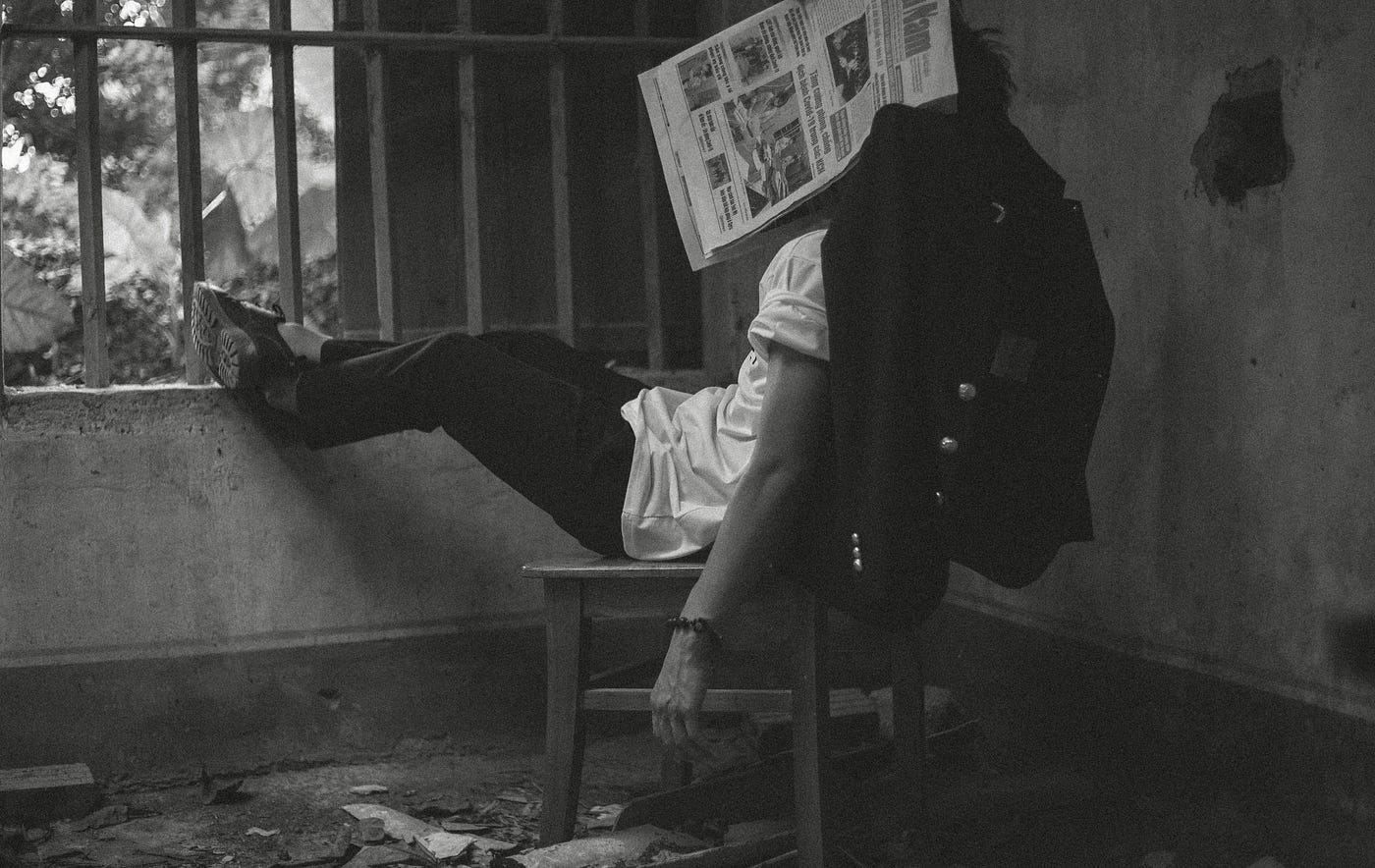
On any given day, you’re reaching for your phone two hundred times. Not for a desire to call a loved one or create, but for a rabid need to consume.
You want to know things.
The definition of a word. The latest on yet another war we shouldn’t be fighting. Morbid curiosity surrounding an influencer who decided to filet himself on a livestream for the world to see. And it’s clear he has pain, he just doesn’t know where to put it. Or is it a return to fame he craves? He, like the world, can’t seem to distinguish between the two.
But still, you want to know things. The time of that Teams meeting where you pitch your idea to sell more things to people who don’t need them. Your job is to find a point of entry and spotlight your customers’ perceived emptiness, a gaping hole only your company’s product could fill.
You want to know things. The weather, but it’s out of habit because today will be as insufferable as all the days preceding it. Heat is a constant state. When you were small you used to run barefoot in the street, now you watch videos of a woman in Texas frying an egg on a sidewalk. You want to know whether it’s Thursday or Friday because the days seem to repeat themselves with minor variation. You have to check your phone to know the date and time. One day there’s money in your bank account and one day there isn’t. You want to know — are the conspiracy theories true? Is the world spying on little old nobody you? Why do all the billionaires tape their camera lenses? What do they know that you don’t?
Your want to know things becomes a bottomless need no technology can fill.
Sometimes, late at night, under the covers, when everyone’s asleep and no one can see you scroll, you need to know if life is worth living because everything is so hard. You wake wading through molasses and fall asleep nearly drowning in it, and you’re tired of tabulating your groceries before checkout. You count your change. This is your life and you need to know whether your suffering will be rewarded.
You want to know if the world is a fine place worth fighting for as Hemingway would have it in For Whom the Bell Tolls, or should you be defiant. Hurl your phone out the window, along with the rest of your electronic devices, and say, let the world go to hell, but I should always have my tea as Dostoyevsky wrote in Notes From The Underground. You watch a series of videos of a beautiful light, a twenty-six-year-old woman who succumbs to bile duct cancer, and you open your window, phone in hand, ready to hurl.
But then you watch a video, one you remember from childhood, about the aftermath of Mr. Hooper’s death on Sesame Street, and how all the adults crowd around Big Bird to comfort and reassure him. The episode is about grief — plain and simple — but it’s also a celebration of a great life lived, and how we keep going for the departed. Because we still have the gift of being here. Because love never leaves.
Half a life ago, Coldplay insisted we live in a beautiful world, yes we do, yes we do. I believe we live in a cruel, cold world with beautiful parts. The whole is a mess, but we can live for the parts: the parts that nourish us, make us whole. And that sustenance isn’t a product hocked with an affiliate link or sold through a course or a clever marketing campaign. It’s the stories we tell, the pictures we draw and paint, the music we make, the jokes we crack that make us cry with laughter — it’s the art that distracts us from this terrible place and makes us believe, albeit for a little while, that maybe the world isn’t so terrible. Maybe everyone’s not foaming at the mouth.
Perhaps the world is a gruesome place, our living, breathing Chernobyl, but it’s also worth fighting for.
I write all of this for me as a reminder for when I want to give up because nobody reads, they’d rather scroll. Nobody reads sad stories because if they want sadness they can read the news or look in the mirror. Everyone says they’re fed up with influencers and their preened perfection and yet the influencers continue to flaunt their finery and real people trying to endure their real lives get ridiculed for not being aesthetic enough. We want real, but we want it packaged and palatable. We want a brand but one that whispers instead of shouts. We want stories but spare us the big words and complicated characters.
Deliver us our binaries, our black and whites because it’s easier to pick a side instead of navigating the mess of the middle.
I write all of this for me (and for you) because there exist people for whom art still matters. The kind of art that makes them feel something when they’ve become so numbed by the world they falsely believed they couldn’t feel at all. I felt this way last week when I stumbled upon a video of an infamous influencer who sliced himself in front of a camera. I was briefly horrified, not by the act, but by a platform that would allow this to air for over thirty minutes.
And then I set my phone down and wondered why I didn’t feel something for someone so obviously hurting, and it occurred to me that the world has been desensitizing us for a long time. We saw the towers fall on television. Wars broadcast in our living room, the carnage laid bare for everyone to see. Parts of children carried in sacks in Gaza as their parents weep. People sobbing into their phones, people stoic and living in their cars because they lost their job, humans alone and clawing for the air, for anyone to stop and see them — pain has risen up all around us and social media has brought it into our homes and weakened our hearts. Because there’s only so much we can take.
And maybe the powers that be know this and still continue to fill our screens with the cruel and unbelievable because they want to wear us down. They want us comfortably numb, dull around the edges. They want us cynical and desensitized because it’s when we are broken that we can be remade into their image. Orwell warned us of this: The Party told you to reject the evidence of your eyes and ears. It was their final, most essential command. See and believe only what the powers command.
So, let’s remove all the books from the libraries and defund all the art and cut down all the trees in the parks and shoot the wolves and drive white rhinos into extinction. Because what do they care with their gulf stream jets, private islands, and underground cities. What do they care for art and beauty beyond petty amusements?
But art matters to decent people because it reminds us that we’re human. And our survival is worth fighting for. That we should feel something, anything, when we step over a homeless person’s body on our way to work because we are stepping over a fucking body. That we should be horrified by watching a genocide play out in 4K, enough that we want to do something about it. They want us tethered to our phones instead of taking a respite from them. They don’t want us reading the books or watching the films or listening to music because the artists that came before us warned us about the kind of people who want to rid art from the world. Because it’s one step in making us less feeling, less empathic, less human.
An old friend of mine, Krista Madsen, writes a beautiful newsletter not enough people read. It’s strange, packed with stories, history, and facts that evoke wonder. She lives in Sleepy Hallow, New York, a town rife with ghost stories and haunted lore, and from a recent guided tour you can feel her exhilaration through the screen. All the weird and wonderful tidbits she learned of the lives people lived.
In a recent newsletter, she bulleted out all the individual stories that terrify and tantalize, and it put me to thinking that when we’re scrolling through all this horror and muck on social media the powers that be want you to see this as a collective. They don’t want you to pause and consider each person’s plight. They want you sick, fed up, and throwing your hands in the air and saying, fuck it all, I feel nothing.
When you consume art, you’re forging an intimate, real connection with an individual. You’re moved by their lyrics, you belly-laugh at their comedy, you’re awestruck by the pictures they paint and the stories they tell. Your connection is real, visceral, and human. And the work is carrying that humanity into your daily life. That is what art inspires us to do. To feel, to know, to love, to care about the world in which we live.
So, I tell myself: keep writing. Even if five people read it. Even if nobody buys your books. Even if agents won’t take you on because your last book tanked and it’s a business, baby. Write even if your stories don’t “go viral” because who wants a plague anyway? Write because one person will stumble on your work and feel something about it, about you, and the hope is the beauty you’ve given them is a kind of beauty they bring into their life, share with the world.
Your newsletters are a magnificent piece of art. Never stop writing!
THIS!!!! <3